
How Wireless Kiosk Solutions Are Changing the Way Prepaid Dealers Operate
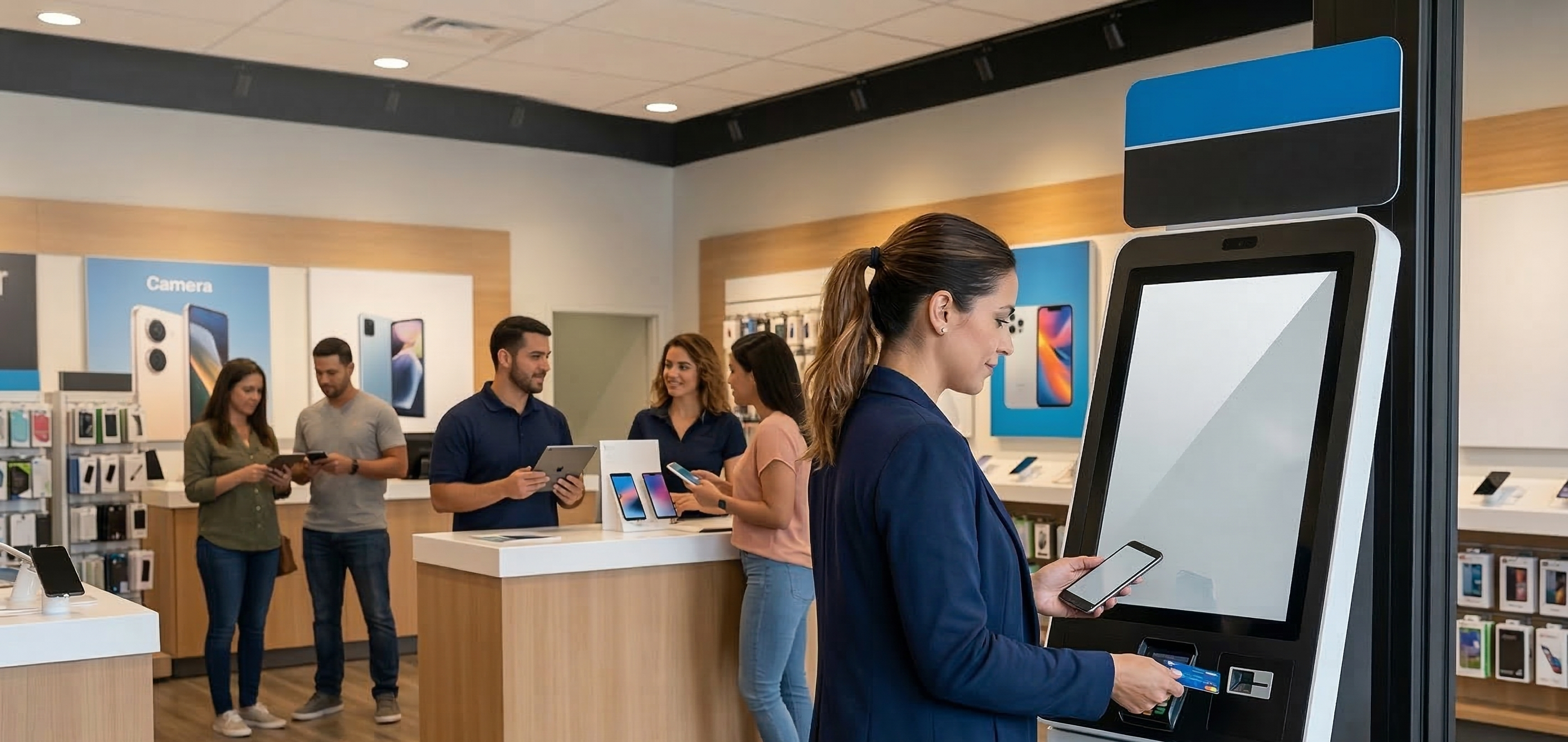
Walk into any high-performing prepaid wireless store today, and you'll notice something different about how transactions move. The line is shorter. The associate isn't stuck processing a bill payment while three customers wait. And somewhere near the front of the store, a kiosk is quietly handling the kind of work that used to eat up half a shift.
Wireless kiosk adoption in prepaid retail isn't a trend anymore. It's an operational decision that more independent dealers are making because the math works—and because the platforms that power kiosks in a wireless environment have finally matured enough to support it.
What Makes a Wireless Kiosk Different From a Generic One
Most retailers think of kiosks as bill payment or basic self-service. In prepaid wireless, the requirements go further. A kiosk deployed at a dealer location needs to handle activations, SIM provisioning, account modifications, plan upsells, and KYC-compliant identity verification — and do so while staying connected to carrier systems in real time.
A generic kiosk doesn't do that. A payment terminal bolted to a stand doesn't do that. What prepaid dealers need is hardware and software built specifically for the carrier environment, connected to a distribution backend that keeps inventory, pricing, and carrier data current across every transaction.
That distinction matters more than most dealers realize when they first start evaluating options.
The Functions That Actually Drive ROI
The kiosk use cases that generate measurable returns in a prepaid retail setting aren't the flashy ones. They're the repetitive, high-volume transactions that pull associates away from higher-value work:
- Prepaid top-ups and balance replenishments
- New activations on in-stock SIM cards
- Plan changes and account lookups
- Bill payments across multiple carriers
- Basic troubleshooting flows that reduce wait time
When a kiosk absorbs even 30 to 40 percent of that daily transaction volume, the associate freed up by that shift can focus on device sales, accessories, and plan upgrades — conversations that actually build ticket size.
The Distribution Layer Most Dealers Overlook
Here's where many kiosk evaluations go sideways. Dealers spend time comparing hardware specs and screen sizes without asking the more important question: what platform is this connected to, and can that platform actually support a prepaid wireless environment?
Kiosks in wireless retail don't operate in isolation. Every activation, every top-up, every SIM swap touches a carrier system. That means the distribution layer behind the kiosk needs to handle real-time carrier connectivity, commission tracking, inventory reconciliation, and compliance workflows — simultaneously, without errors.
CTI Wireless has built its platform around exactly this problem. Their wireless kiosk solutions are designed from the ground up for the prepaid dealer channel, with carrier integrations that allow the kiosk to process activations, account changes, and payments the same way a trained associate would — just faster and without the queue. Their dealer tools are built to reduce the friction points that typically cause kiosk deployments to underperform: mismatched carrier data, failed provisioning, and compliance gaps.
Why Real-Time Sync Isn't Optional
Prepaid wireless inventory has a short shelf life in terms of relevance. Carrier promotions change. Plan availability shifts by market. A SIM that was eligible for activation this morning may have a hold on it by noon.
A kiosk that can't verify eligibility, check live inventory status, or confirm plan availability before completing a transaction is a liability, not an asset. It generates chargebacks. It creates customer service problems. And it puts the dealer in a compliance conversation with the carrier they don't want to have.
Real-time data sync between the kiosk interface and the distribution backend isn't a premium feature. It's the baseline requirement that separates a kiosk deployment that works from one that creates more problems than it solves.
Managing Kiosks Across Multiple Locations
For dealers operating more than a handful of locations, kiosk management becomes a different kind of challenge. Pushing a carrier promotion update to one kiosk is manual work. Pushing it to 20 kiosks simultaneously requires a centralized management layer — something most point-of-sale platforms weren't built to provide.
This is where prepaid-specific distribution infrastructure shows its value. Prepaid IQ offers a prepaid wireless distribution platform built for dealers who need to manage carrier product catalogs, pricing, commissions, and replenishment across multiple locations through one system. For dealers integrating kiosk hardware into their retail network, that kind of centralized control is what makes multi-location deployment practical rather than chaotic.
Updating a promotion, adjusting pricing, or pushing a new carrier product to every kiosk in the network at once — that's the difference between a kiosk strategy and a kiosk headache.
What's Holding Some Dealers Back
The two objections that come up most in conversations about kiosk deployment are cost and complexity. Both are legitimate. And both have become easier to address over the past couple of years.
On cost: the upfront investment for carrier-integrated kiosk hardware with payment processing and ID verification is real. But the ROI math in high-traffic prepaid locations — where the kiosk absorbs significant bill payment and top-up volume — has improved as labor costs have risen. Dealers in competitive urban markets are generally seeing payback periods of 12 to 18 months when the kiosk is properly integrated into the store's workflow.
On complexity: the dealers who've had the worst experiences with kiosk deployments are typically the ones who tried to make generic hardware work in a wireless environment. When the platform behind the kiosk was built for wireless retail from the start, the implementation process is substantially cleaner.
Where the Market Is Heading
Carriers are pushing more transaction volume toward self-service channels. Consumer expectations around wait time and convenience have shifted permanently. And the dealer channel is consolidating in ways that favor operators who can handle volume efficiently without growing headcount proportionally.
Kiosk deployment in prepaid retail sits at the intersection of all three of those pressures. Dealers who get the platform selection right — hardware backed by carrier-connected distribution infrastructure — are positioning themselves to handle more business with the same footprint.
The technology has been available for a while. What's changed is that the distribution platforms supporting it have caught up to what the prepaid dealer channel actually needs.