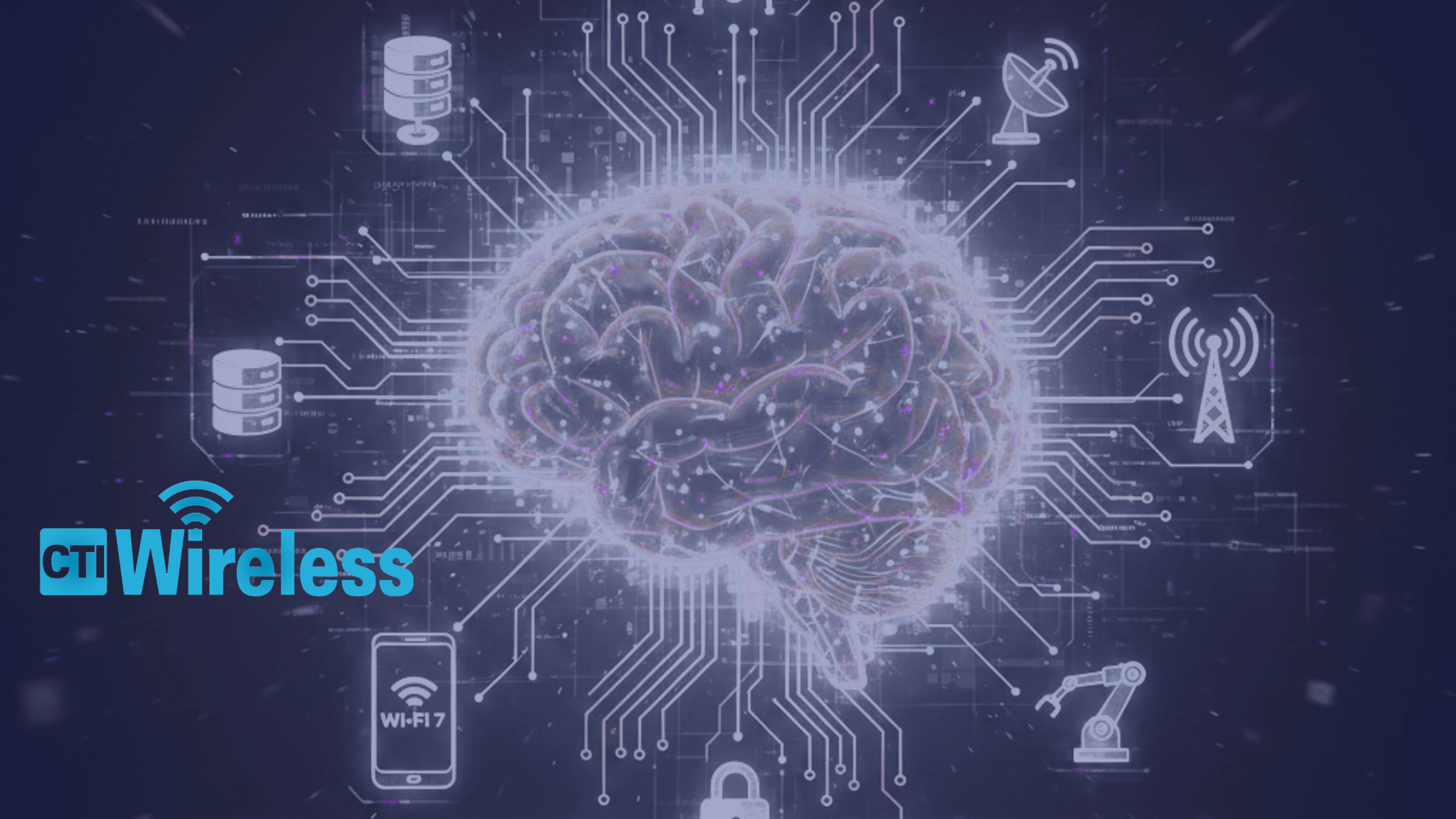
The 2026 Connectivity Blueprint: Navigating the New Wireless Landscape
As we step into 2026, the definition of "reliable connectivity" has undergone a seismic shift. For the modern enterprise, wireless is no longer just a utility—it is the organization's central nervous system.
Last year, we saw the stabilization of 5G Advanced and the initial commercial ripples of Wi-Fi 7. Today, these technologies are the baseline. To maintain a competitive edge, IT leaders must move beyond simple bandwidth and embrace the era of AI-Native Networking.
Beyond 5G: The 2026 Reality
In 2026, we have moved past the "speed wars." While 5G Advanced (Release 18) has delivered the promised ultra-low latency, the real value lies in its integration with the Internet of Everything (IoE).
Enterprises are now utilizing Private 5G Networks to power autonomous floor robots, real-time digital twins, and augmented reality (AR) collaboration suites. If your current infrastructure still treats mobile devices as secondary to wired connections, your "blueprint" is already obsolete.
The Rise of AI-Native Networks
The most significant trend of 2026 is the transition from "managed" networks to AI-Native Networks. Unlike traditional systems that require manual configuration, AI-native architectures use machine learning to:
-
Self-Optimize: Adjusting signal strength and frequency in real-time based on user density.
-
Self-Heal: Predicting hardware failures before they result in downtime.
-
Self-Protect: Identifying anomalous traffic patterns that signal a sophisticated cyberattack.
At CTI Wireless Group, we specialize in transitioning legacy systems into these autonomous environments. Through our Telecom Expense Management (TEM) , we ensure that as your network gets smarter, your costs remain lean.
Building Your 2026 Connectivity Blueprint
A future-proof strategy for this year requires a three-pillar approach:
-
Unified Converged Connectivity: Seamlessly hand off between Wi-Fi 7 in the office and 5G Advanced in the field.
-
Quantum-Resistant Security: As quantum computing advances, encrypting your wireless data with Post-Quantum Cryptography (PQC) is no longer optional.
-
Data-Centric Management: Using real-time analytics to understand not just if people are connected, but how that connectivity impacts productivity.
Why "Standard" Connectivity is No Longer Enough
In the hyper-competitive market of 2026, a "standard" connection is a bottleneck. High-bandwidth applications such as spatial computing and real-time AI processing demand a level of precision that off-the-shelf solutions cannot provide.
According to recent Gartner Infrastructure reports, companies that fail to adopt autonomous networking by the end of 2026 will see a 25% increase in operational costs due to manual troubleshooting and inefficient data routing.
Conclusion: Partner with the Experts
The complexity of the 2026 wireless landscape requires more than just a provider; it requires a strategic partner. Whether you are looking to optimize your current spend or build a private 5G ecosystem from the ground up, CTI Wireless Group has the expertise to lead the way.
Frequently Asked Questions
What is an AI-native network? An AI-native network is an infrastructure designed from the ground up to use Artificial Intelligence and Machine Learning to manage, optimize, and secure data traffic without human intervention.
How has enterprise wireless changed since 2024? The shift has moved from "high speed" to "high intelligence." Technologies like Wi-Fi 7 and 5G Advanced now focus on extreme reliability, lower latency for AR/VR, and massive IoT density.
Is it time to upgrade to Wi-Fi 7? If your organization relies on high-density video conferencing, spatial computing, or real-time data analytics, Wi-Fi 7 is essential to prevent network congestion in 2026.